



Most writers think first about what they’re saying on the page: the event, the image, the line of dialogue. Fewer think about how close the reader is standing when they see it.
Yet you can feel the difference instantly. Sometimes a passage feels like you’re inside someone’s pulse, and sometimes it feels like you’re being told a story across a table, with a thoughtful narrator guiding your understanding.
Writers often focus on plot, character, and structure first, which is right and necessary. But there is another decision running quietly underneath every paragraph: how close the reader is allowed to stand to the character’s mind. When that distance is mis-set, even a good scene can feel dull, confusing, or over-explained. When it is set well, clarity and emotional impact increase without adding extra words.
This is a controllable part of craft, not a mysterious talent effect. It must be chosen and adjusted with intention.
This week, we work with that dial.

Kindling: Craft lesson in Narrative Distance
Narrative distance is how close the reader feels to the story and to the character’s inner experience. It is the space between the reader and the character’s mind. It is psychological and perceptual—about access to thought and feeling—not physical space.
There is a sliding scale here, not a binary. It is not locked to first person or third person. And it is not fixed by genre. A first-person narrator can be emotionally distant. A third-person narrator can be extremely close. Distance is a craft decision.
A useful working ladder looks like this:
Very distant: authorial, expert, summarising, interpretive. Big-picture framing and commentary. Common in textbooks and historical writing, but also useful in narrative when context or authority is needed.
Moderate distance: characters observed from the outside with filtered access to thought. Language such as she realised, he noticed, she thought gives partial interior access while keeping interpretive space.
Close distance: limited interiority with strong sensory detail and immediate perception. The reader is near the character’s experience but not fully inside their thought stream.
Very close distance: interior monologue, thought rhythm, emotion without explanation, minimal filters. The reader experiences events from inside the mind.
Language choices control the dial.
Distance increases with filtering and explanation:
she felt
he saw
she realised
she was anxious
summary instead of moment
narrator commentary
Closeness increases with immediacy:
sensory detail
body sensation
specific images
perception as it happens
emotion shown through what is noticed rather than labelled
The structural effect matters.
Closer distance creates intimacy and emotional immersion. Greater distance creates interpretive authority and reflection. Closer distance gives experience. Greater distance gives interpretation. Strong prose often shifts distance within a scene — zooming in for emotional beats and pulling back for clarity or thematic framing.
An exercise to prime the brain (neuroscience)
Before drafting, choose one constraint deliberately (like narrative distance). Pre-deciding a craft parameter reduces cognitive load and decision fatigue, which helps the brain move more quickly into focused writing mode.
Into the fire: Using Narrative Distance this week
Begin each writing session this week by consciously choosing the narrative distance for that day’s work. Name it before drafting: distant, moderate, close, or very close.
Write for 10–20 minutes holding that distance as steadily as possible.
Halfway through, pause and check:
Are we inside the body or outside observing?
Is there sensation or explanation?
Are filter verbs appearing?
Are emotions labelled or experienced?
Notice when the distance shifts and whether that shift clarifies meaning or diffuses it.
Prompts to build momentum
Write a moment of realisation from inside the character’s thoughts, without explaining it.
Write the same moment as if observed by someone else in the room.
Describe an emotional event using only physical actions and surroundings.
Write a memory from far away in time, letting reflection reshape it.
Write a charged moment while deliberately keeping emotional language out.
Tend the flame: Thinking about Narrative Distance
A regular writing practice is built from repeatable decisions, not bursts of inspiration. Craft controls like narrative distance make revision more practical because they give something specific to adjust.
If a passage feels flat, the distance may be too far. If it feels heavy-handed, the distance may be too close with too much explanation layered in. Adjustment is available. The setting can be changed.
A writing myth to unlearn
Point of view determines distance.
It doesn’t. Point of view and distance interact, but they are not the same control. Changing pronouns does not automatically change intimacy. Distance comes from how information and experience are delivered on the sentence level.
Embers to carry
Set the distance with intention. Let the reader stand where the meaning is strongest. And remember that closeness and distance are tools, not rules. Have a play with this!
The bookshelf: Books that do this well
Being a great writer means being a great reader. Here are some books that do Narrative Distance well.
The enduring flame: Mrs Dalloway, by Virginia Woolf
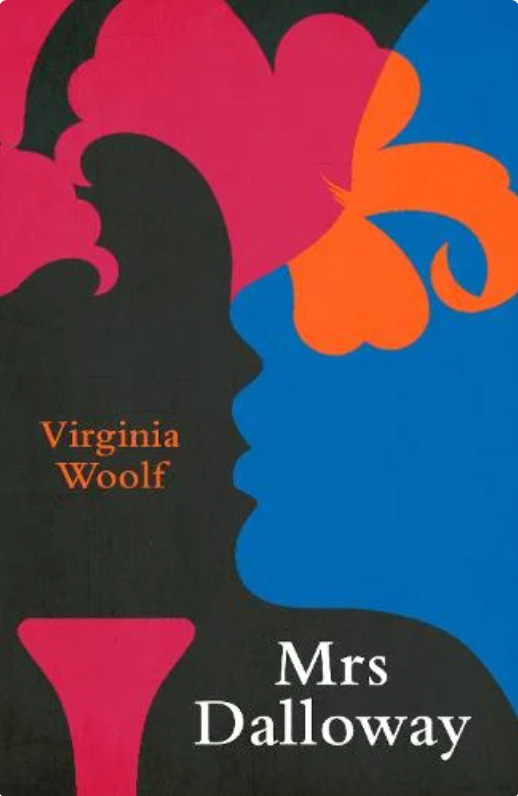
Fluid movement between inner thought and external observation without breaking voice. A sustained demonstration of how distance can shift sentence by sentence while coherence holds.

The craft accelerant: On Fiction, by Virginia Woolf

Essays on the art of fiction that examine consciousness, perspective, and the writer’s responsibility to inner life. A strong companion text for thinking about how narrative access shapes meaning.
The current heat: Outline, by Rachel Cusk

A contemporary example of emotional restraint and deliberate narrative distance. Meaning is shaped through observation and reported speech rather than interior confession, signalling a modern appetite for interpretive space.
Creative Cross-training
Watch a filmed scene once with full sound and once with the sound muted. Notice how emotional access changes when interior cues disappear and only observable action remains. This mirrors the effect of shifting narrative distance on the page.
Slow burn: Closing remarks on Narrative Distance
The work each week is simple: learn the craft point, then do the writing. Small, repeated applications build fluency over time. Distance is adjustable. Momentum is built through practice. Keep going.
P.S.
As the first issue of Weekly Writing Fuel, this post is free and open to everyone. Hopefully, it has whet your palate and you’d like to stay on for your weekly top up of writing craft and practice. To do so, be sure to subscribe to a paid tier:


